A balcony is a strange growing space. It can be three degrees warmer than the street below, windier than a rooftop, and darker than either, all in the same afternoon. That is why so many herb pots start strong in May and look tired by August. The plants were never the problem. The plan was.
Herbs are forgiving, but they are not identical. Rosemary and basil come from wildly different climates and will not thank you for the same treatment. Once you match a handful of reliable herbs to the light and shelter your balcony actually offers, the rest becomes routine: a few minutes of watering, a weekly pinch, and small adjustments as the seasons turn. Here is how to set that up from scratch.
Check the Light Before You Buy a Single Pot
Most first-time balcony gardens fail on this point alone. Before choosing anything, spend a day at home and note when sunlight actually hits the space. Not when it is bright — when it is direct. A balcony facing south or west in the northern hemisphere usually gets six hours or more; north-facing balconies may get two hours of weak morning light, or none at all. Balconies with solid parapets or deep overhangs lose another hour or two near the floor, which is why a pot on the railing often outperforms an identical pot in the corner.
Also watch the wind. Upper floors funnel it, and a windy balcony dries pots faster than sun does. A trellis, a row of taller planters, or a simple mesh screen on the windward side makes a surprising difference.
- Six or more hours of direct sun: rosemary, thyme, sage, oregano, lavender, basil.
- Four to six hours, or sun with hot afternoon shade: parsley, chives, mint, coriander, rocket.
- Two to four hours, or bright but indirect light: mint, parsley, chives, lemon balm, wild rocket, chervil.
If your balcony gets almost no direct sun, be realistic. Grow mint, chives and parsley for leaves, keep expectations modest, and skip rosemary and basil entirely rather than watching them sulk.
Choose Containers That Earn Their Space
Small pots are the second most common mistake. A 15 cm pot dries out within hours in June, which means daily watering and stressed roots. Aim for at least 30 cm across and 25 cm deep for individual herbs, and deeper for anything with a taproot or a long life ahead of it: rosemary, sage and thyme all prefer 30 cm of depth.
Whatever you buy, it needs a drainage hole. Without one, water collects at the bottom and roots rot quietly while the surface looks fine. A free-draining potting mix — not garden soil, which compacts and turns to brick in containers — does more for drainage than a layer of gravel, which does not actually improve flow.
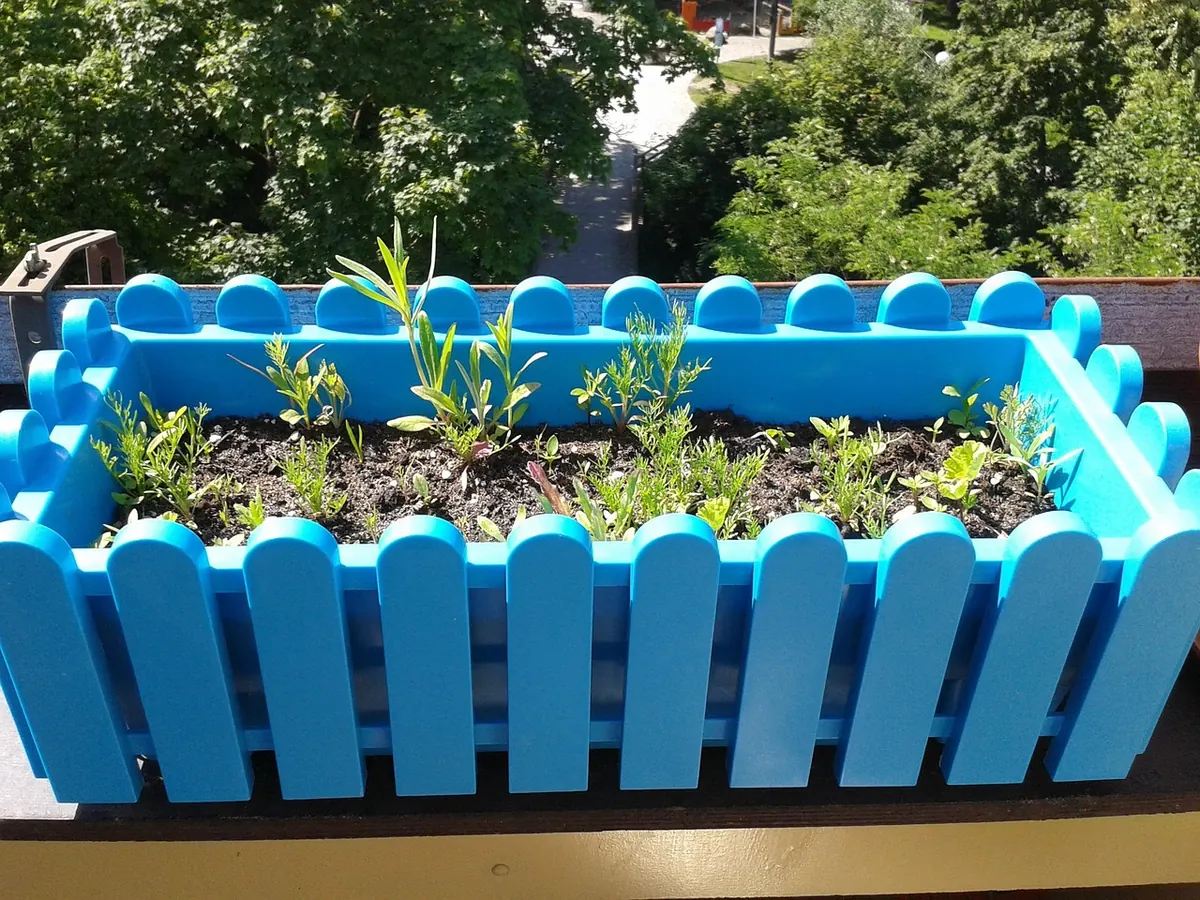
Terracotta breathes and looks good, but it is heavy and dries out fast. Glazed ceramic and good-quality plastic hold moisture longer and are lighter, which matters if you are hanging anything over a railing. Speaking of which: check what your building allows, secure every railing box with brackets rather than wire, and keep heavy pots near the wall rather than at the outer edge.
The Herbs Worth Growing in Your First Year
Start with five or six plants. A balcony crowded in April becomes unmanageable in July, and herbs need airflow to stay healthy.
- Basil: buy small plants rather than seed if your season is short. Pinch the tops constantly and remove flower buds to keep leaves coming.
- Mint: always in its own pot. It spreads by runners and will otherwise colonise everything nearby within a season.
- Chives: tough, cold-tolerant, and one of the first things to return in spring. Snip whole stems, not just the tips.
- Parsley: slow to germinate from seed, so buy a plant. Flat-leaf types have better flavour for cooking.
- Rosemary: wants sun, sharp drainage and a large pot. Water it deeply but let the top few centimetres dry out between drinks.
- Thyme and oregano: both compact, drought-tolerant and happy in a sunny spot with gritty soil.
- Sage: a woody perennial that becomes shrubby and generous in its second year.
- Coriander and dill: fast, short-lived, and best sown little and often rather than grown as a single large plant.
Grouping helps, too. Put sun-lovers together and shade-tolerators together, so you are not trying to water desert plants and moisture-lovers on the same schedule.
Watering and Feeding Without Guesswork
Container herbs live on the edge of drought. Water in the morning so leaves dry before evening, and water until it runs out of the bottom of the pot — a light sprinkle just dampens the surface. In summer you might water daily; in October, twice a week. Push a finger two centimetres into the soil rather than trusting the look of the surface.
Feed lightly. A liquid feed every two to three weeks from spring to midsummer suits leafy herbs. Overfeeding produces lush, floppy growth with less flavour, and soft growth invites aphids. For woody Mediterranean herbs like rosemary and thyme, less is definitely more.
Seasonal Care, Month by Month
Spring: reset and sow
Scrape off the top two centimetres of old compost and replace it with fresh. Trim dead stems from rosemary and sage, repot anything that has filled its container, and sow coriander, dill and rocket in small batches every three weeks for a continuous supply. Wait until nights stay reliably above 10°C before putting basil outside.
Summer: water, pinch, shade
This is the season that tests your setup. Water early, mulch the surface with gravel or compost to slow evaporation, and move pots that scorch into afternoon shade. Pinch basil and mint weekly. If you go away, group pots together in the shade and stand them in a shallow tray of water rather than relying on a neighbour's memory.
Autumn: divide and protect
Bring parsley, chives and mint back into active growth by cutting them back hard after flowering. Reduce watering as light drops. Take cuttings of rosemary and sage now if you want replacements, and move tender pots against a sheltered wall where they will catch residual warmth.
Winter: do less, deliberately
Most container herbs slow down rather than die. Stop feeding, water sparingly — only when the compost is dry and never when the pot is frozen — and accept that chives and mint will disappear and return in spring. Rosemary, thyme and sage usually hold their leaves. Basil is the exception: unless you have a warm, bright windowsill indoors, treat it as an annual and start again in spring.
On very cold nights, wrap pots in bubble wrap or old blankets — it is the roots freezing, not the leaves, that kills plants in containers. Raise pots onto feet so they do not sit in freezing water.
Harvest So the Plants Keep Producing
Cut from the top and the outside, never strip a plant bare. Take no more than a third of a herb at once. Basil and mint respond to pinching directly above a pair of leaves, which triggers two new shoots. Rosemary and thyme prefer whole stems snipped just above a woody junction. Parsley and coriander should be cut as whole outer stems at the base, not plucked leaf by leaf.
A Five-Minute Weekly Routine
Once a week, walk the balcony with a bucket. Check the undersides of leaves for aphids, remove anything yellowing or mildewed, turn pots a quarter turn so plants grow evenly, and pinch out any flower buds on herbs you are growing for leaves. Then refill the watering can and stop.
That is the whole system: honest light, generous pots, six well-chosen plants, and care that shifts with the weather instead of fighting it. Do that, and a balcony keeps giving you something to cook with in every month of the year — even in the quiet ones.
Photo: Hans / Pixabay