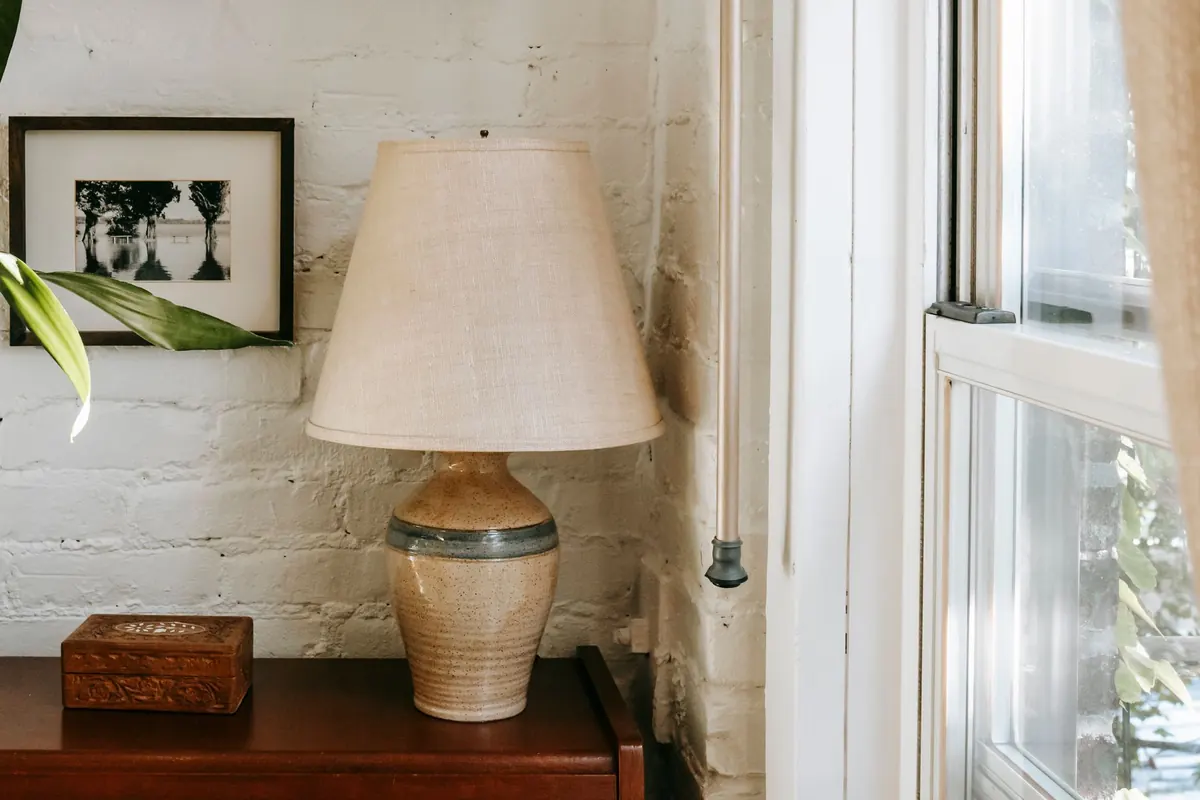
There is an afternoon in late autumn when the change becomes obvious. The lamp goes on at four o'clock, the window turns into a grey rectangle, and the corner where you read all summer now looks like a place you don't go. Nothing about your home has actually shrunk. It simply holds less light.
You can't move the sun. But you can change how a room catches, bounces and keeps whatever light arrives, and you can build a few habits that make the darker months feel deliberate rather than merely dim. None of it requires repainting the house or buying a cartload of lamps.
Start With the Windows You Already Have
Before you spend anything, deal with the glass. A window that has collected summer dust, pollen and a film of kitchen grease is a filter between you and the only free light source you have. Washing the panes inside and out, plus the frames and sills, is the cheapest brightening job in the house — and the most overlooked.
Then look at what hangs in front of it. Heavy curtains that stay closed through the day, a valance that covers the top third of the glass, a sofa pushed against the sill: each one takes a bite out of your daylight hours. In practice that might mean swapping winter drapes for a sheer layer, hooking curtains back to the frame rather than across the window, or simply moving the armchair a metre to the left so it stops blocking the light.
Outside counts too. If a hedge, a shed or an overgrown shrub sits between the window and the low winter sun, trimming it back gives you light you already paid for. And on bright days, open everything. A room that gets twenty minutes of direct light holds the memory of it in warm walls and floors for hours afterwards.
Build Light in Layers, Not Pools of Glare
One bright ceiling light in a dark room makes everything worse: it lights the middle, leaves the corners black, and flattens the space into something like a waiting room. What makes a room feel generous in winter is overlap — several modest sources, at different heights, so there's no dark gap between them.
Three layers, one room
- Ambient: the general wash of light — a ceiling fitting on a dimmer, or better, a floor lamp aimed at the ceiling so the light spreads and softens before it reaches you.
- Task: light where you actually do things — over your shoulder at the reading chair, under the kitchen cabinets, above the desk. Aim it at the page, not at your eyes.
- Accent: the small, low glows that make a corner feel inhabited. A table lamp on a bookshelf, a picture light, a lamp on the hallway console.
A simple trick: plug two or three lamps into one timer or smart plug set for half an hour before sunset. You arrive home to a lit room instead of walking into a dim one and switching on the overhead light out of duty.
Bulbs, briefly
Read the label for lumens (brightness) and kelvin (colour temperature). Somewhere around 2700–3000K reads as warm and domestic without turning everything peach; much cooler than that and the room starts to feel like an office, which is the opposite of what you want at six in the evening. If a room needs more light, add a source rather than screwing a harsher bulb into an existing one.
Let Surfaces and Mirrors Bounce Light Back
Light doesn't stop where it lands. Pale walls, a white ceiling, a light wood floor and a glossy tabletop all send it back into the room. Dark, matte surfaces swallow it. This is why a room can measure the same and feel entirely different in February than it did in June.
Mirrors are the most direct version of this. A mirror adds no light of its own — it repeats the brightest thing in front of it, so hang it where it faces a window rather than a blank wall, ideally catching that rectangle of sky from the side of the room you actually sit in. The same logic applies to glass tabletops, polished metal, a glossy picture frame, a row of jars on a shelf.
Choose Colours That Hold Light
You don't have to paint everything off-white. But it helps to be deliberate about where dark tones go. Keep the largest surfaces — walls, ceiling, floor — on the lighter end, and let deep colours do their work on smaller planes: a chimney breast, the inside of a bookcase, a single wall behind the sofa. A dark ceiling is atmospheric in summer and oppressive in December.
Undertone matters more than the name on the tin. Whites and greys with a warm, slightly yellow or pink base feel soft under lamplight; cool blue-greys go steely as soon as the sun drops. If you can, paint a patch and look at it at seven in the evening with the lamps on, not at noon.
Texture does similar work. A wool throw, a sheepskin on the chair, a linen shade instead of a plastic one, a rug with some pile — these catch and scatter light rather than reflecting it flatly, and they make a room feel warmer at the same temperature.
Anchor the Day With Two Rituals
Morning: get to the light early
If you can, step outside within an hour of waking, even for ten minutes with a coat over your pyjamas. Daylight on your face in the morning does more for how the rest of the day feels than any lamp you can buy. On days when that's impossible, open the curtains fully the moment you get up, sit near the window with your coffee, and move the chair that's become a coat rack out of the way.
Dusk: light the rooms before you need them
There's a particular gloom that settles between four and five in December, and it's worse when you watch it happen. Switch lamps on early — half an hour before you think you need them — so the room never fades around you. Later, turn off the overhead light and keep only the small ones on. That drop in brightness an hour before bed is a useful signal, and it makes the evening feel like a choice rather than a power cut.
A Weekend Reset in an Hour
Pick a Saturday morning, put on something you don't mind getting dusty, and work through this in order. It's the highest-return hour of the season.
- Wash the window panes, frames and sills on the rooms you use most.
- Clear the windowsills of clutter so the glass is unobstructed.
- Swap heavy curtains for sheers, or at least hook the existing ones back.
- Move one piece of furniture that blocks a window.
- Replace the coolest bulb in the room you sit in and add one more small lamp.
- Set a timer for the lamps so they come on before sunset.
- Reposition a mirror so it reflects a window rather than a dark corner.
Start With One Corner This Week
Don't do all of it at once. Choose the room you sit in most, and start with the two cheapest things: clean glass and one warm lamp in the right place. Live with it for a week and notice whether you gravitate towards that corner. Then build outwards.
The point of this work isn't to fake summer indoors. It's to give the dark hours some shape and warmth of their own, so that a November evening feels like somewhere to be rather than something to get through. A lit lamp, a clear window and a chair facing the right way will do more than you'd expect.
One sensible note: if the shorter days leave you persistently low, sleeping badly or struggling to function, that's worth a conversation with your doctor rather than a shopping trip. Light and colour can improve how a room feels; they aren't a substitute for proper advice.
Photo: Charlotte May / Pexels